Getting a personal loan has become easier than ever. Whether you need funds for a medical emergency, home renovation, wedding expenses, travel plans, or debt consolidation, a personal loan can provide quick financial support.

However, with countless loan options available from banks and NBFCs, choosing the right personal loan can be overwhelming. A wrong decision could result in higher interest costs, expensive fees, or repayment difficulties.
To help you make an informed choice, here are five important factors you should consider before applying for a personal loan.
Why Choosing the Right Personal Loan Matters
Many borrowers focus only on the loan amount and EMI while ignoring other important aspects such as processing fees, loan tenure, prepayment charges, and lender-specific benefits.
A well-researched decision can help you:
✔ Get a lower interest rate
✔ Reduce the total cost of borrowing
✔ Enjoy faster loan approval and disbursal
✔ Avoid hidden charges
✔ Manage your repayments comfortably
Let’s explore the key points you should evaluate before selecting a personal loan.
1. Start with Your Existing Bank or NBFC
Before applying elsewhere, check personal loan offers from the banks and NBFCs where you already have a relationship.
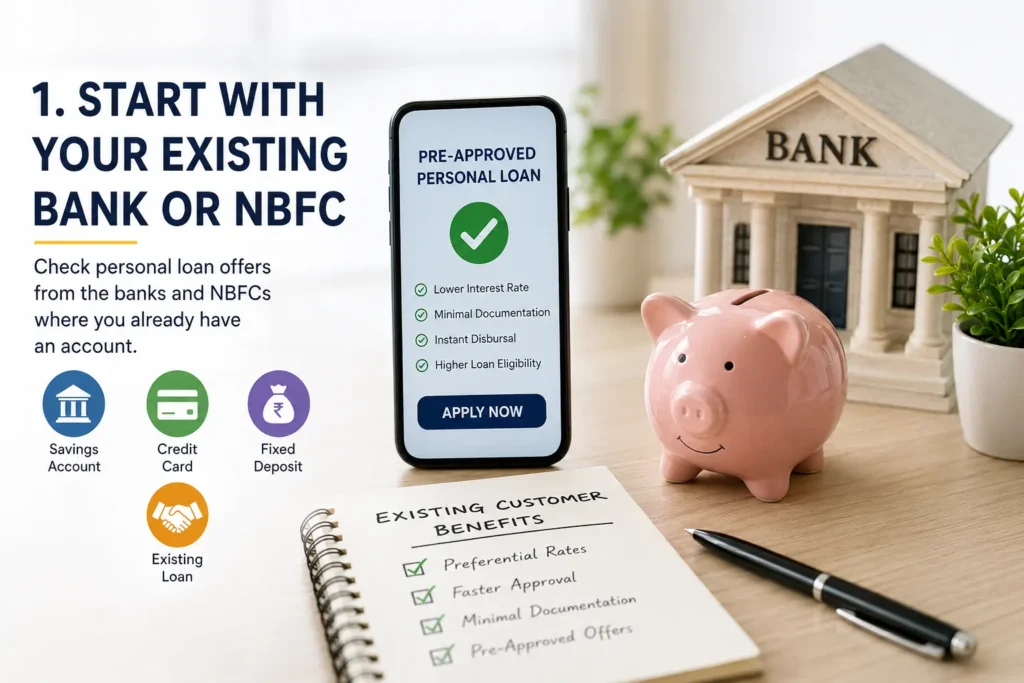
If you maintain a:
- Savings account
- Salary account
- Fixed deposit
- Credit card
- Existing loan
you may be eligible for special benefits as an existing customer.
Benefits of Applying Through Existing Lenders
Many lenders offer:
- Preferential interest rates
- Higher loan eligibility
- Faster approval process
- Minimal documentation
- Pre-approved personal loan offers
If you have a strong repayment history and a healthy credit profile, you may qualify for a pre-approved personal loan that can be disbursed almost instantly.
For borrowers who need urgent funds, these offers can be extremely beneficial.
2. Compare Multiple Loan Offers Before Applying
One of the biggest mistakes borrowers make is accepting the first loan offer they receive.

Personal loan interest rates can vary significantly from one lender to another based on factors such as:
- Credit score
- Monthly income
- Employment type
- Job profile
- Employer category
- Existing financial obligations
Why Comparison is Important
Every lender follows a different credit assessment policy. As a result:
- Loan approval chances may vary
- Eligible loan amounts may differ
- Interest rates may not be the same
Additionally, during festive seasons, many banks and NBFCs offer:
- Lower interest rates
- Reduced processing fees
- Special promotional offers
Comparing multiple loan offers helps you identify the most cost-effective option.
Use Online Financial Marketplaces
Instead of visiting multiple bank branches or websites, use online financial marketplaces to compare:
- Interest rates
- Processing fees
- Loan tenure options
- Eligibility requirements
- Additional charges
This not only saves time but also helps you make a smarter borrowing decision.
3. Choose the Right Loan Tenure Based on Your Repayment Capacity
Your loan tenure plays a crucial role in determining both your monthly EMI and the total interest you pay over the life of the loan.

Longer Loan Tenure
Advantages:
- Lower monthly EMI
- Easier repayment management
Disadvantages:
- Higher overall interest cost
Shorter Loan Tenure
Advantages:
- Lower total interest payable
- Faster debt repayment
Disadvantages:
- Higher monthly EMI
How to Decide the Ideal Tenure
Choose a tenure that balances affordability and cost-effectiveness.
Most lenders prefer borrowers whose total EMI obligations, including the new personal loan EMI, remain within 50% to 55% of their monthly income.
If your obligations exceed this range, consider:
- Opting for a longer tenure
- Reducing the loan amount
- Improving your repayment capacity before applying
Selecting the right tenure can help you avoid financial stress in the future.
4. Don’t Ignore Processing Fees and Other Charges
Many borrowers focus only on interest rates and overlook additional charges that can significantly increase the total cost of borrowing.
Common Personal Loan Charges
These may include:
- Processing fees
- Documentation charges
- Stamp duty charges
- Late payment penalties
- EMI bounce charges
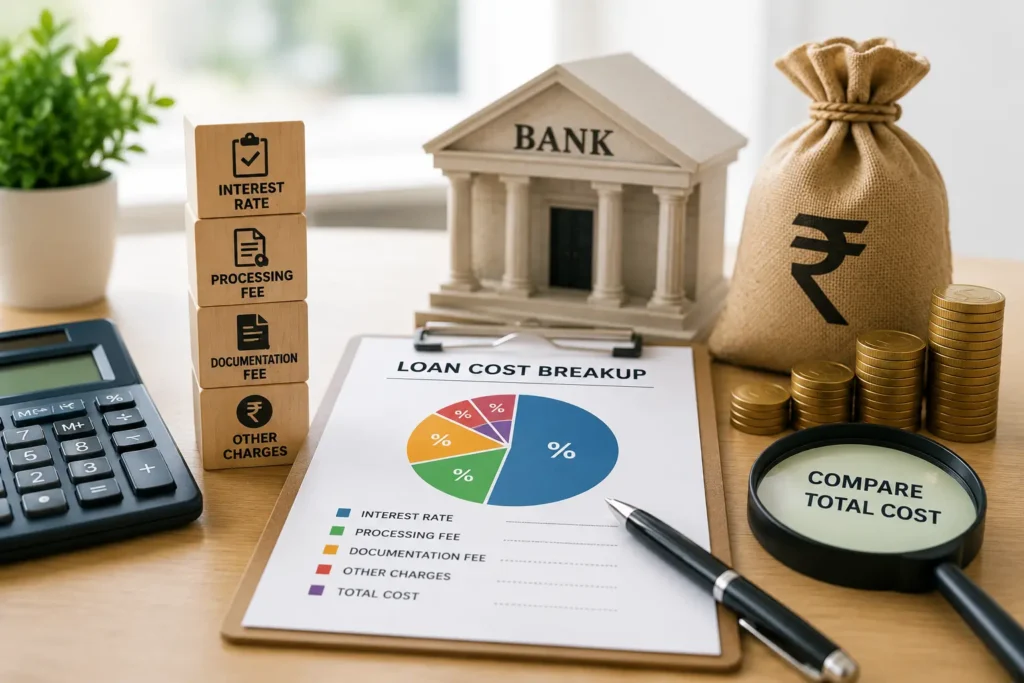
Processing Fees Matter
Among all additional costs, processing fees usually have the biggest impact.
Many lenders charge up to 4% of the loan amount as a processing fee, although the exact percentage varies.
Some lenders:
- Cap processing fees at a fixed amount
- Offer discounts during festive seasons
- Completely waive fees under promotional campaigns
Before applying, compare all applicable charges and calculate the total borrowing cost—not just the interest rate.
5. Check Prepayment and Foreclosure Terms Carefully
Many borrowers plan to repay their loans early when they receive bonuses, incentives, or other unexpected income.
That’s why understanding prepayment and foreclosure rules is extremely important.
RBI Guidelines on Prepayment Charges
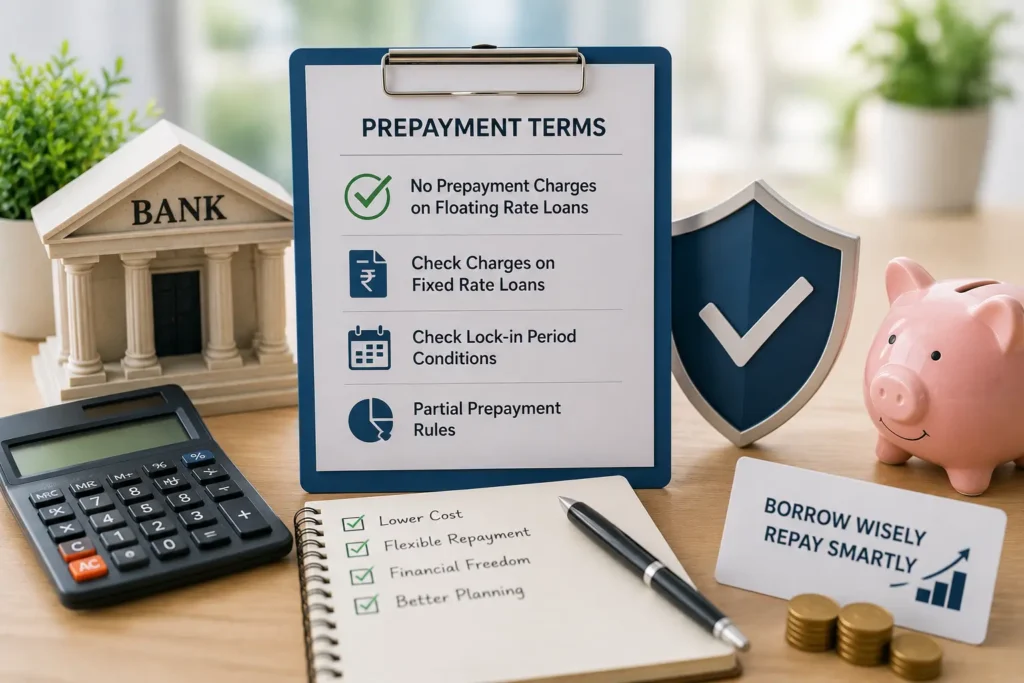
As per RBI guidelines:
- Banks cannot charge prepayment penalties on floating-rate personal loans.
- Fixed-rate personal loans may attract prepayment or foreclosure charges.
Important Conditions to Check
Many lenders allow prepayment only after a borrower has completed a specific number of EMIs.
Before finalizing a loan, check:
- Prepayment charges
- Foreclosure fees
- Lock-in period requirements
- Partial prepayment conditions
These factors can make a significant difference if you plan to close your loan ahead of schedule.
Common Mistakes to Avoid While Taking a Personal Loan
Avoid these common borrowing mistakes:
❌ Applying without comparing lenders
❌ Ignoring processing fees and hidden charges
❌ Choosing a tenure solely based on low EMI
❌ Not checking prepayment conditions
❌ Borrowing more than required
❌ Applying with multiple lenders simultaneously
Being aware of these mistakes can help improve your loan approval chances and reduce borrowing costs.
Final Thoughts
A personal loan can be a useful financial tool when chosen wisely. However, rushing into a loan agreement without comparing offers and understanding the terms can lead to unnecessary expenses.
Before applying, always:
✔ Check offers from existing lenders
✔ Compare multiple loan options
✔ Select a suitable loan tenure
✔ Review all fees and charges
✔ Understand prepayment and foreclosure conditions
Taking these simple steps can help you find the most suitable personal loan while keeping your borrowing costs under control.
Make an Informed Decision Before You Borrow
The best personal loan isn’t always the one with the quickest approval—it’s the one that offers the right balance of affordability, flexibility, and convenience for your financial needs.
By evaluating these five key factors carefully, you can choose a personal loan that supports your goals without creating unnecessary financial burden.