something important. But the truth is, your credit score can decide whether you get your dream apartment, your dream car, or even funding for your startup idea.

The good news? Understanding your credit score is actually simple.
In this blog, you’ll learn:
- What a credit score is
- Why it matters
- What counts as a good or bad score
- How to improve your score
- The benefits of maintaining a healthy credit profile
What Is a Credit Score?
Think of your credit score as your financial report card.
It is a three-digit number, usually ranging from 300 to 900, that reflects how responsibly you handle money and credit.
Your score is calculated based on:
- Loan repayment history
- Credit card usage
- EMI payments
- Existing debts
- Credit behavior over time
If you pay your bills and EMIs on time, your score improves. Miss payments regularly, and your score drops.
Simply put, your credit score tells lenders whether they can trust you with money.
Understanding Credit Score Ranges
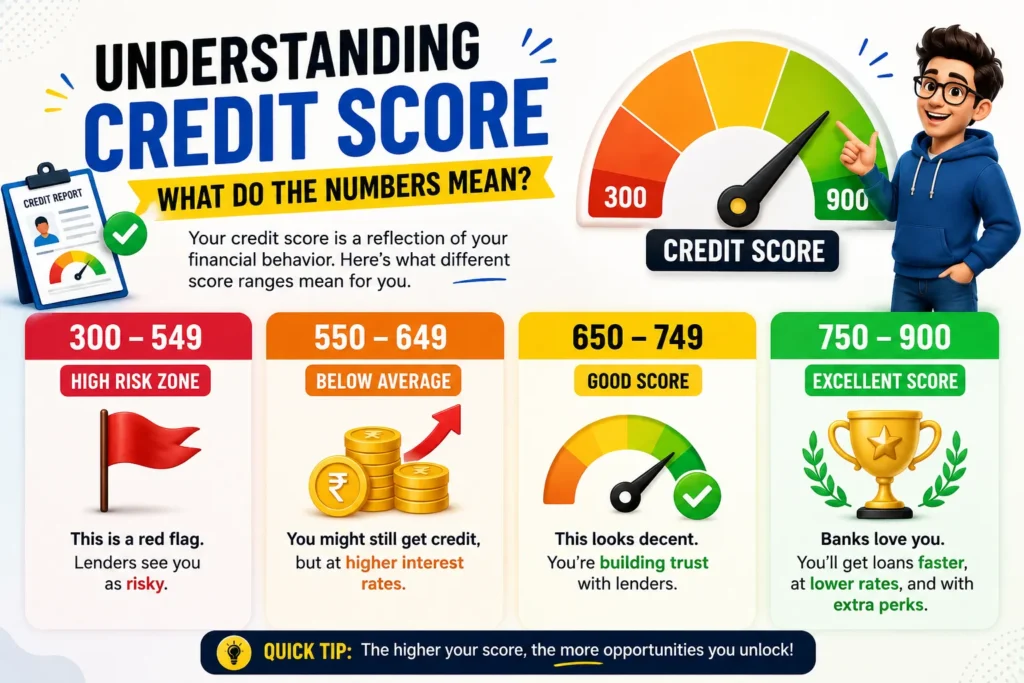
Not all scores are treated the same. Here’s what different score ranges usually mean:
300 – 549: High Risk Zone
This is considered a poor credit score. Banks and lenders may see you as financially risky, making loan approvals difficult.
550 – 649: Below Average
You may still get loans or credit cards, but often at higher interest rates and stricter conditions.
650 – 749: Good Score
This range shows responsible financial behavior. You’re building trust with lenders.
750 – 900: Excellent Score
This is where banks love you. You’re more likely to get:
- Faster loan approvals
- Lower interest rates
- Higher credit limits
- Better financial offers
Who Maintains Your Credit Score?
In India, your credit score is managed by credit bureaus such as:

- TransUnion CIBIL
- Experian
- Equifax
- CRIF High Mark
These bureaus collect financial data from banks, NBFCs, and lenders to update your credit profile regularly.
What Is Considered a Good Credit Score?
A score of 750 or above is generally considered excellent and reliable.
A score below 600 can create difficulties when applying for:
- Loans
- Credit cards
- Home financing
- Personal financing options
The higher your score, the stronger your financial reputation becomes.
Why Does Your Credit Score Matter?
Your credit score impacts more areas of your life than you might think.
Loan & Credit Card Approvals
Banks use your score to decide whether to approve or reject your application.
Interest Rates
A better score often means lower interest rates, helping you save money over time.
Rental Applications
Some landlords review credit history before renting out apartments.
Employment Opportunities
In certain industries, employers may check financial responsibility as part of background verification.
Your credit score is basically your financial credibility.
How to Check Your Credit Score
You can check your credit score online through official credit bureau websites.
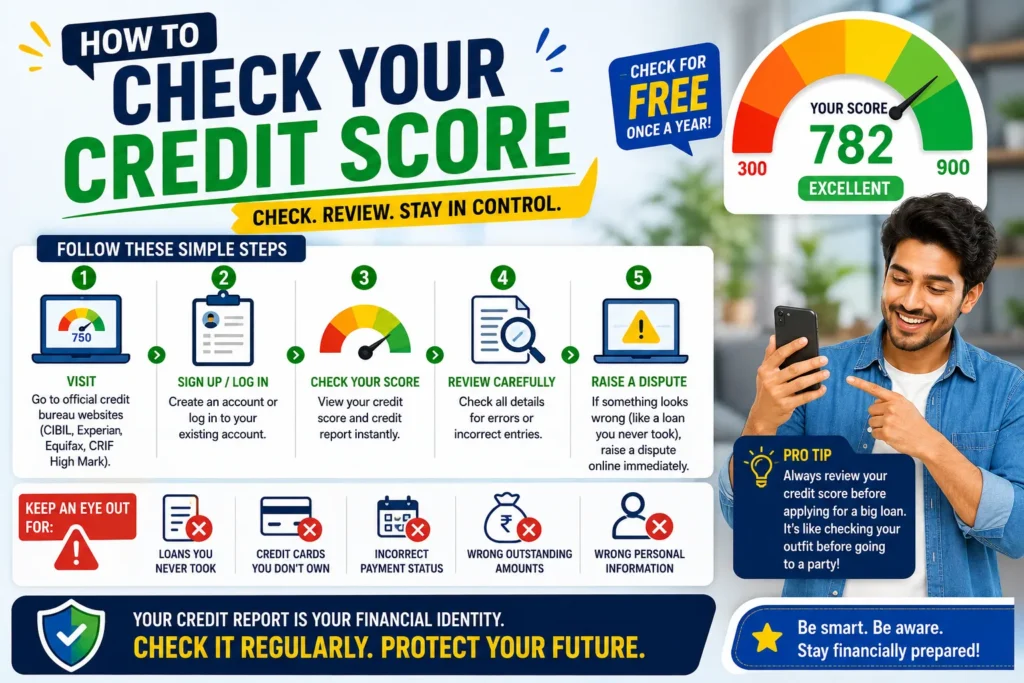
It’s a good habit to review your score regularly, especially before applying for:
- Home loans
- Car loans
- Personal loans
- Credit cards
If you notice incorrect information — such as a loan you never took — raise a dispute immediately.
Monitoring your credit report helps protect your financial identity.
How to Improve a Poor Credit Score
Improving your score takes consistency, but it is absolutely possible.
Pay Bills & EMIs on Time
Timely payments are one of the biggest factors affecting your credit score.
Keep Credit Card Usage Low
Avoid using your full credit limit. Try to keep usage below 30%.
Avoid Multiple Loan Applications
Applying for too many loans at once can make lenders think you’re financially stressed.
Clear Old Debts
Start paying off overdue amounts gradually and consistently.
Stay Patient
Your score won’t improve overnight, but steady financial discipline brings long-term results.
Benefits of Having a Good Credit Score
A healthy credit score comes with several advantages:
- Easy loan approvals
- Lower interest rates
- Higher credit limits
- Better financial offers
- Increased financial flexibility
- Smoother approval processes
A strong credit score gives you more financial freedom and fewer financial headaches.
Final Thoughts
Your credit score is more than just a number — it’s your financial reputation.
It follows you through major financial decisions and influences how lenders, institutions, and sometimes even employers view your financial responsibility.
Take care of your score, stay consistent with repayments, and make smart financial choices.
Because when your credit score is strong, opportunities become easier to access.

Stay Financially Smart
Want more simple finance tips and money awareness content?
Follow for more insights and share this blog with someone who needs a financial glow-up.